Animals and Rotational Grazing
Page under construction! We are a working farm, but come back soon for more info!Pasture-raised chickens, cows, and goats
Why rotational grazing?
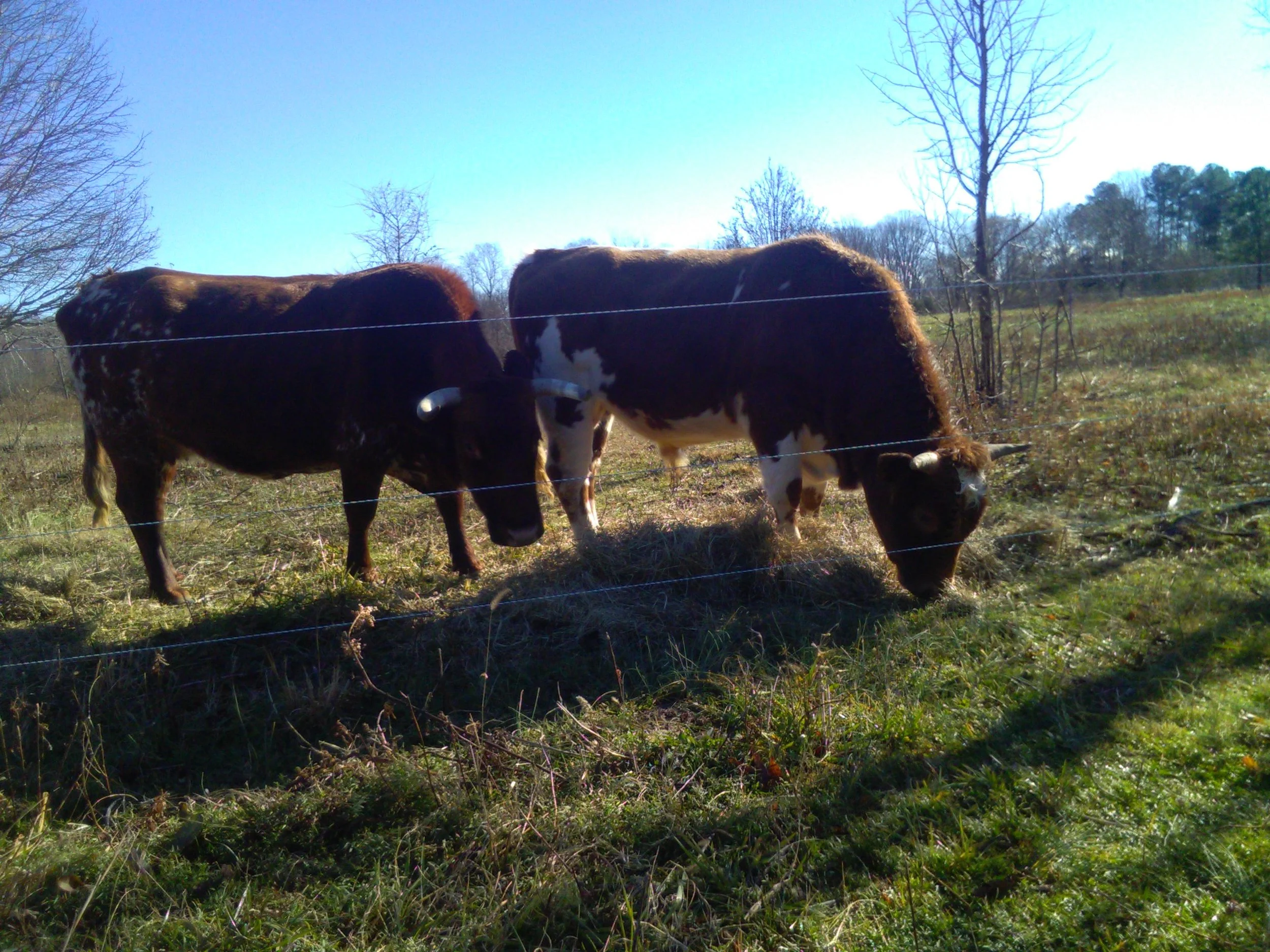
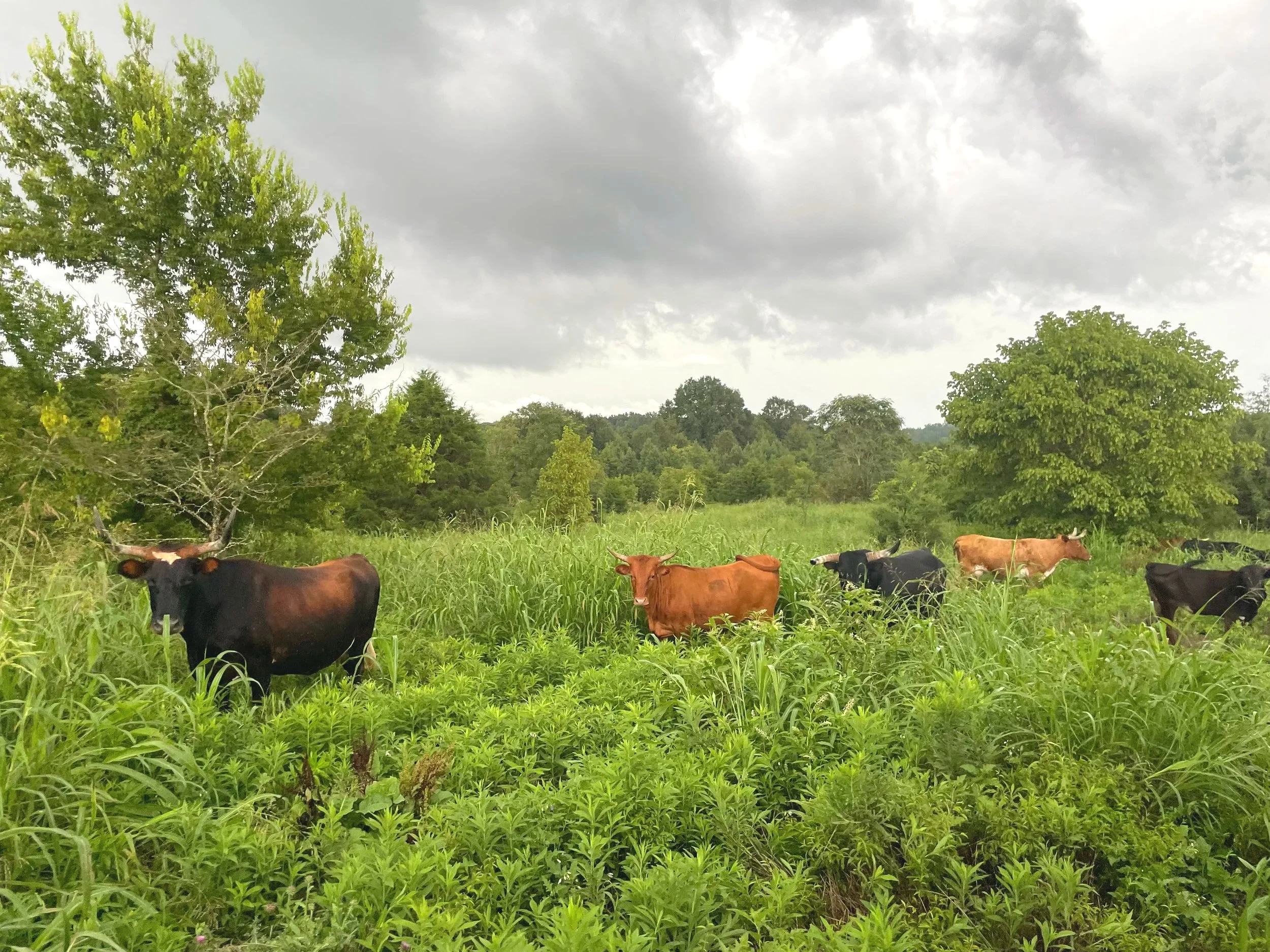
Rather than allowing our cows to graze freely in larger area of grass, we've established smaller areas of land, or paddocks, through which we rotate the herd so that their daily consumption is localized and controlled. This type of cattle management falls under umbrella terms such as ‘holistic management,’ ‘regenerative agriculture,’ and ‘conservation farming,’ while ‘rotational grazing,’ ‘rational grazing,’ and ‘management-intensive grazing’ describe this particular method of pasturing livestock. Overall, it is a system of management that focuses on soil health. The logic is that if you prioritize healthy soil, the soil will sustain the needs of the animals that eat what it produces, and in turn, sustain us who guide the process.
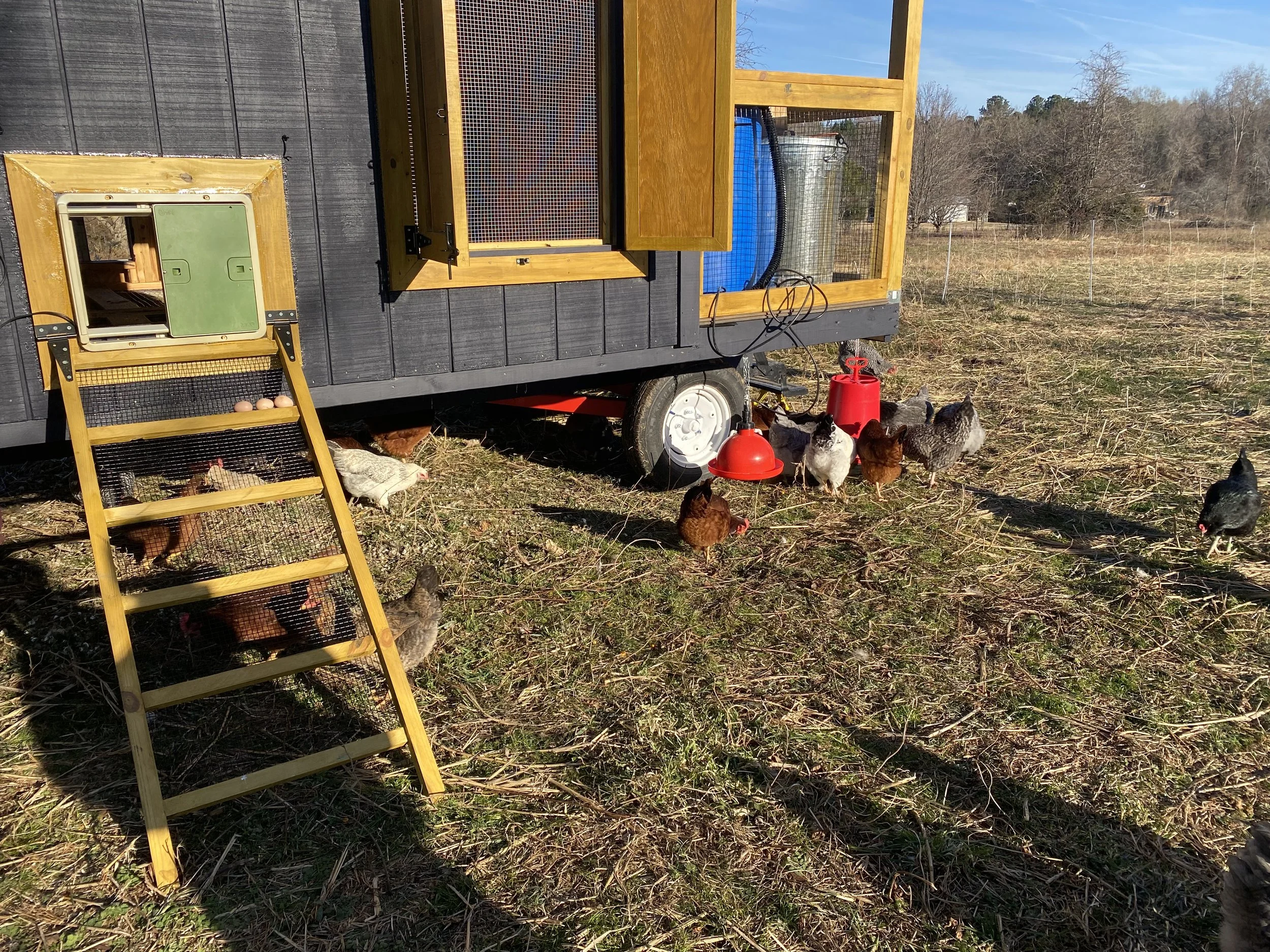
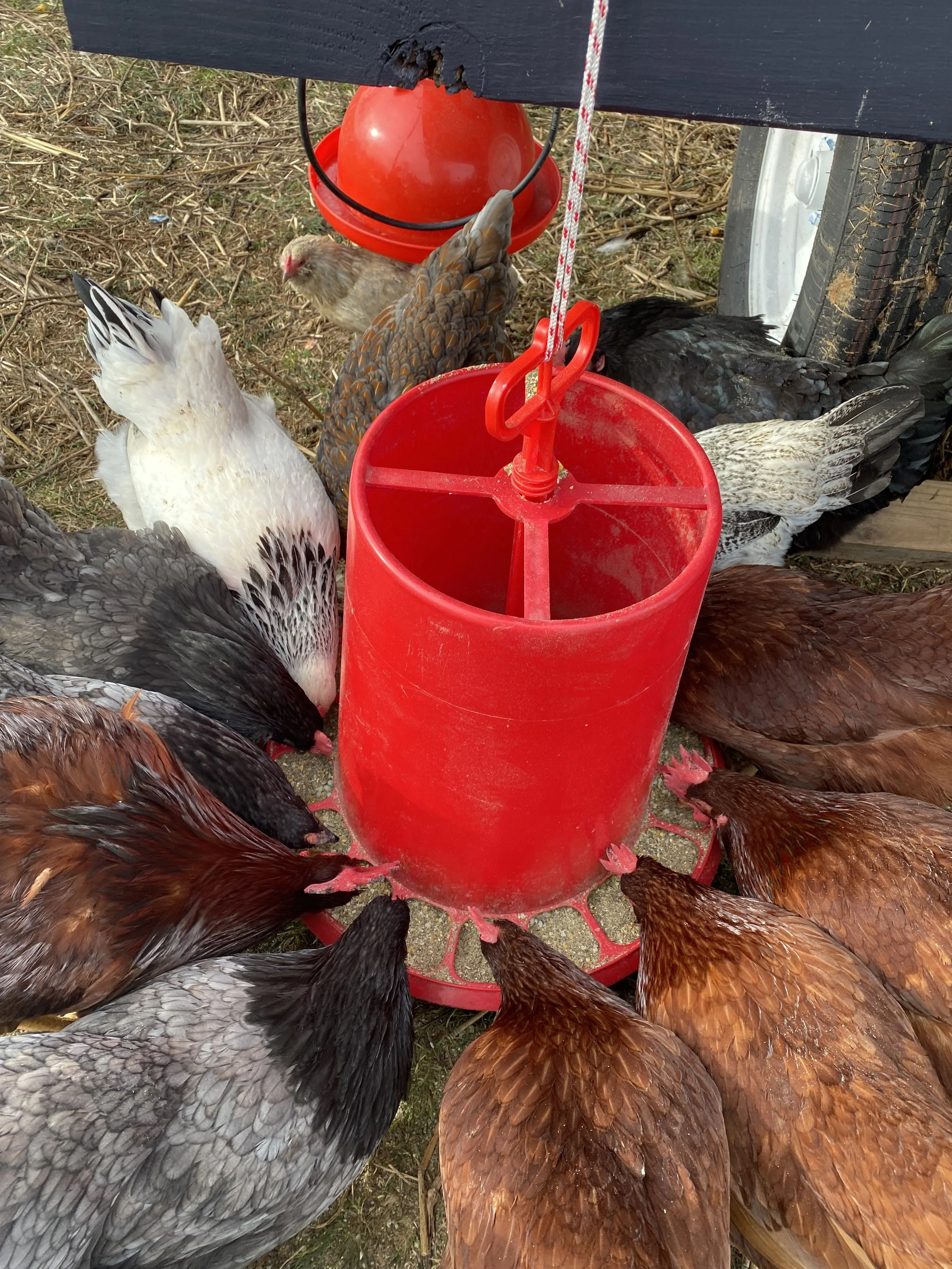
Our Mobile Chicken Coop!
We also rotate our chickens on open pasture with our mobile chicken coop. Their presence in the pasture adds more organic matter to the soil, and their scratching and pecking disturbs the soil surface, which causes more seed germination. They also eat the fly larvae out of the cow patties. The open environment and natural food sources like insects make for healthier, more productive chickens. It is another step towards our goal of producing healthier soils, animals, and people.
Goats will eat anything (all natural, of course)!
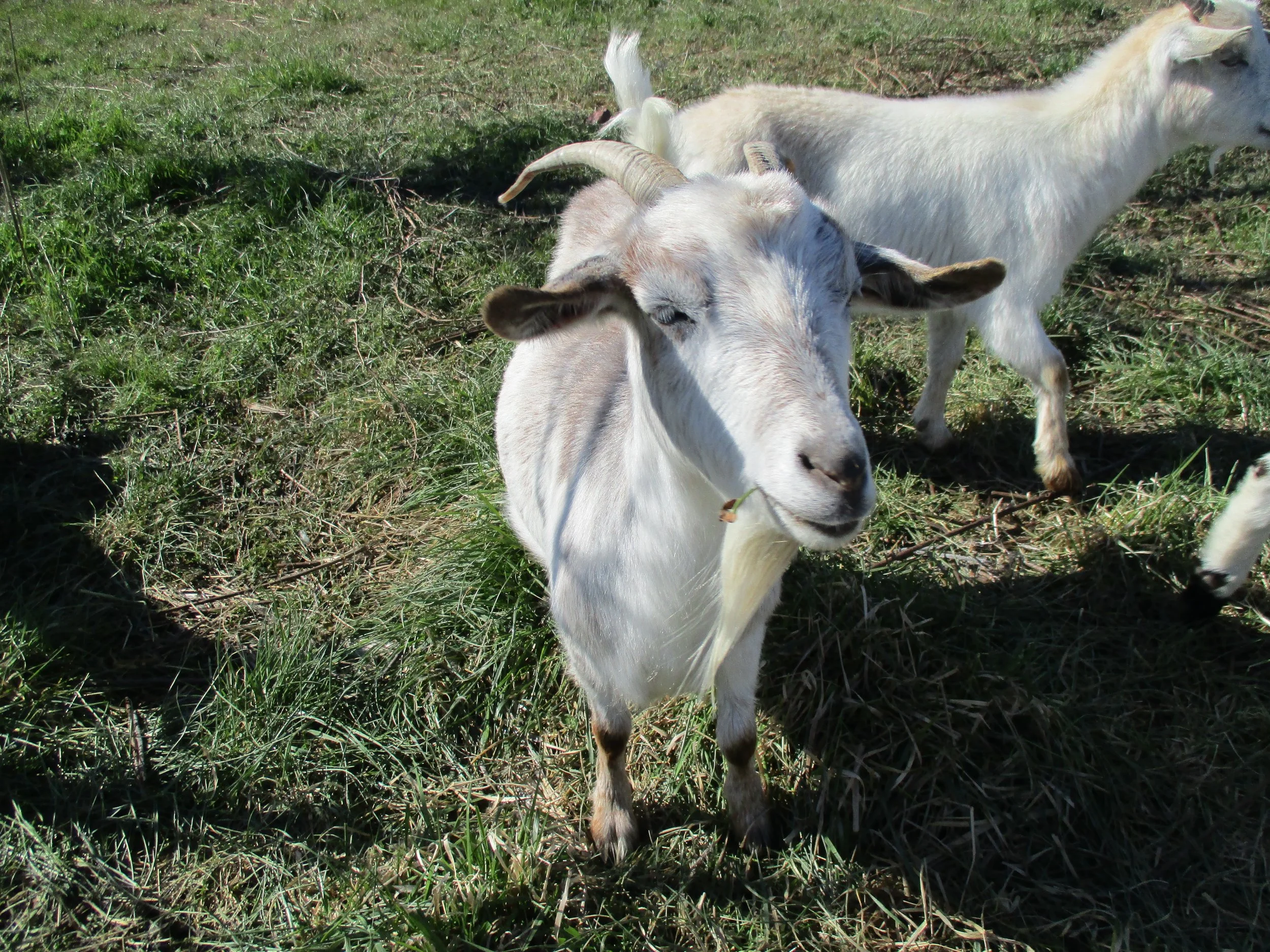
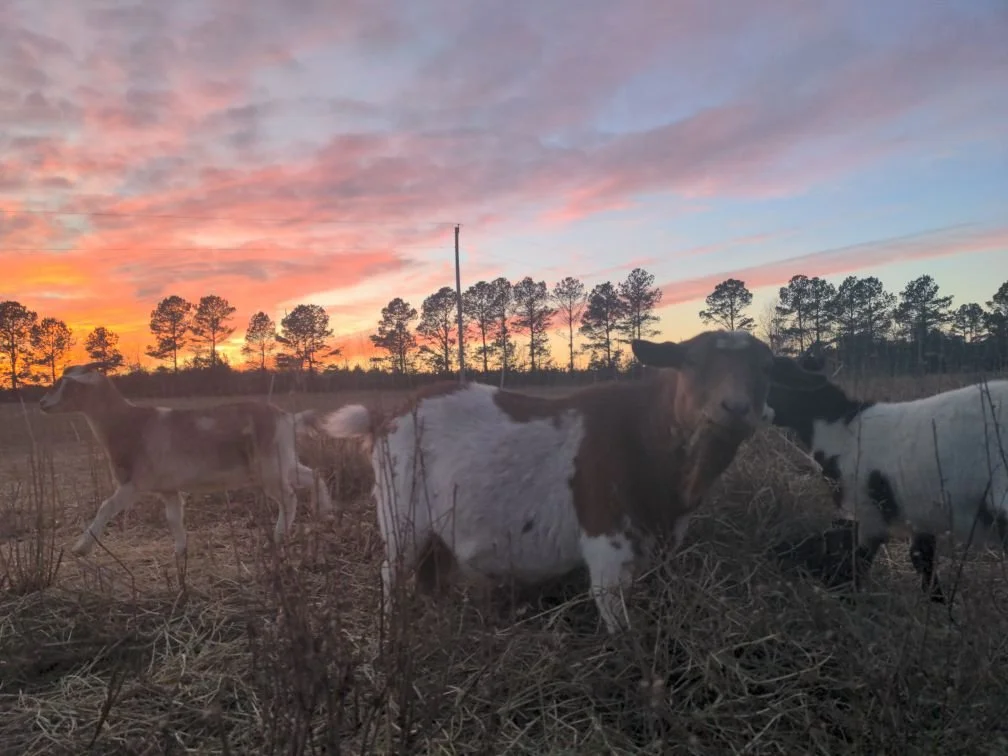
We also rotate our herd of goats on a weekly basis. They bring a second layer of fertilizing manure and eat down the goldenrod, poison ivy, and briars left behind by the cows.