

What we’ve learned from our cows-Year One
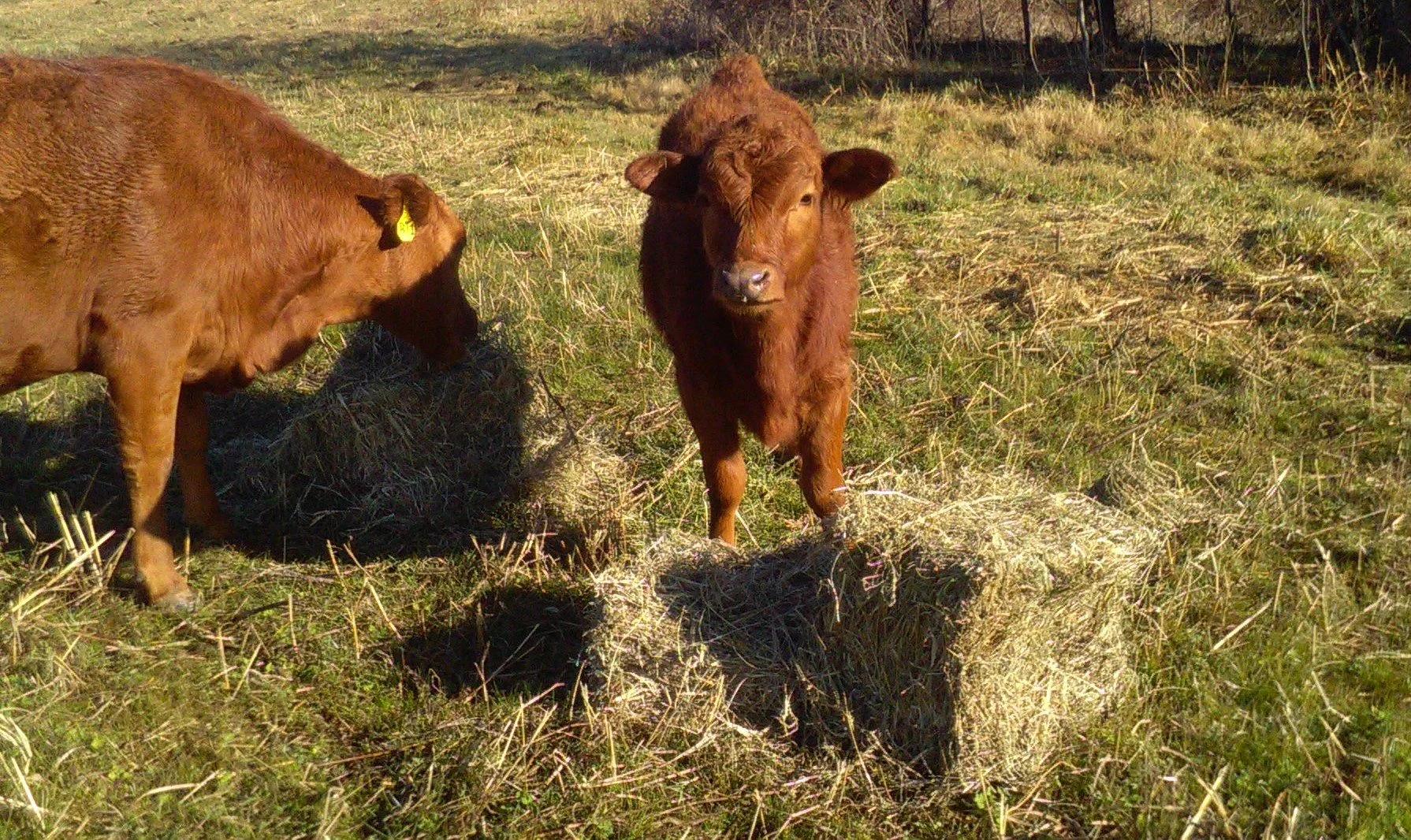
On May 24th, 2025 a white pickup arrived at our farm pulling a black goose-neck horse trailer. We had spent the last month constructing a perimeter fence, and we were proud to direct the newcomers to its gate. With the trailer safely inside the electrified lines, the door was opened and a red and white dappled Pineywoods cow sauntered out with her bull calf in tow. A week later, we were driving down the highway in our own pickup. Behind us was an open trailer with our South Poll heifer inside, calmly enjoying the ride as the wind blew through her brick colored hair. Two weeks later, she gave birth to a female calf. Our cows had arrived.
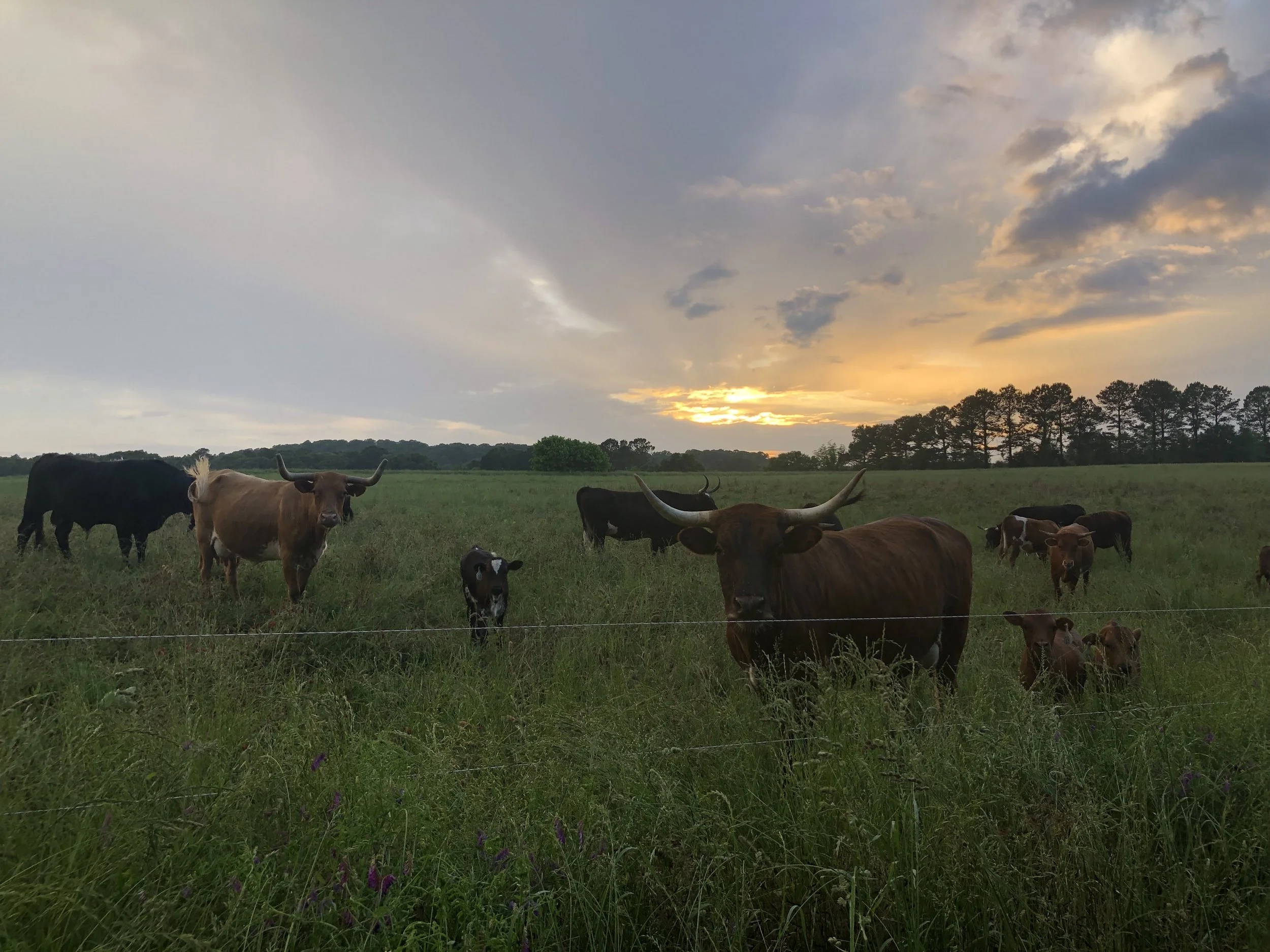
From that moment forward, we came to understand the health of our land and soil as the basis for the cows’—and therefore our own—well-being. Our pastures are filled with a variety of plants that range from vetch, fescue, and Johnsongrass (which cows eat), to milkweed and goldenrod (which they do not). Some areas provide shade and are on higher ground, others are swampy and attract flies and ticks, and others are open and covered with thick vegetation, but offer no relief from the sun. The ground under the goldenrod is hard, and cow pies sit for weeks, allowing the fly larvae within them to hatch and spread. The ground under the Johnsongrass is soft and manure is quickly devoured by the mighty dung beetle, indicating that the soil is healthier and will continue to improve as the insect pulls the manure into tiny holes it burrows into the earth. While on the one hand the process is very straightforward—Cows eat grass. We have grass. Eat the grass, cows.—on the other hand, the dynamic nature of each variable makes it such that every moment presents a new problem and a new possibility.
In order to understand how to bring all of the parts together, we attended workshops on plant identification and growth, consulted with pasture experts at the county extension office, and visited farms that had been rotating their cows for almost 30 years. One of the farms we visited moves their two herds of 70 cows every day. Before our tour began, they explained that moving cows is an art, not a science. We asked another farmer, also an expert on intensive grazing, what we should plant to improve our pastures. He said, “Anyone who answers that question without knowing your specific context is a quack.” Another recommended that before adding seed or nutrients to our soil, we should understand the effects of the first tool we have: our cows. Yet another, in response to the question of how big an area a cow needs in a day or how frequently one should move a herd, refused a standardized answer and instead advised: Define your goal, organize your method, develop a system of evaluation, and get out there and try it. The message was clear. There is no formula, just constant methodical and iterative attempts to bring together the needs of the soil, plants, and animals with our own needs such that we are all contributing towards the same goal.
Grass and How to graze it
Grass, the main component of the cow's diet, has a rate of growth that changes as the plant matures.
Grass, the main component of the cow's diet, has a rate of growth that changes as the plant matures. In its early stages, growth is slow as the reserves of energy from the seed stage are put towards producing the green leaf that conducts photosynthesis. Once established, the plant grows rapidly, gobbling up sunshine and water to send its shoots up, its leaves out, and its roots down. At its maturity, the plant shifts its energy towards producing its seed or flower, and growth once again slows. If grass is cut in the early or late stages of its growth, the time it takes to recover and grow again is much slower than if the grass is cut during the middle growth stage. If a plant is cut too many times in the early stage, the energy supplied from its seed stage will eventually be depleted and it will die. At its early stage, the plant also holds the most nutrients and its shoots are tender, making it the most desired and palatable stage for the cow. As several farmers have told us, the cow always eats dessert first—always. This means if you do not find a way to protect the new growth from grazing cows, it will eventually lead to bare, malnourished soil as the cow continually eats the early shoots until they die. If, however, you rotate cows such that they are exposed to the grass only during its middle growth period, it will regrow rapidly and create healthy, vibrant soil.